Meal prep
Meal prep works best when it fits your actual schedule, fridge space and reheating options instead of creating a second job.
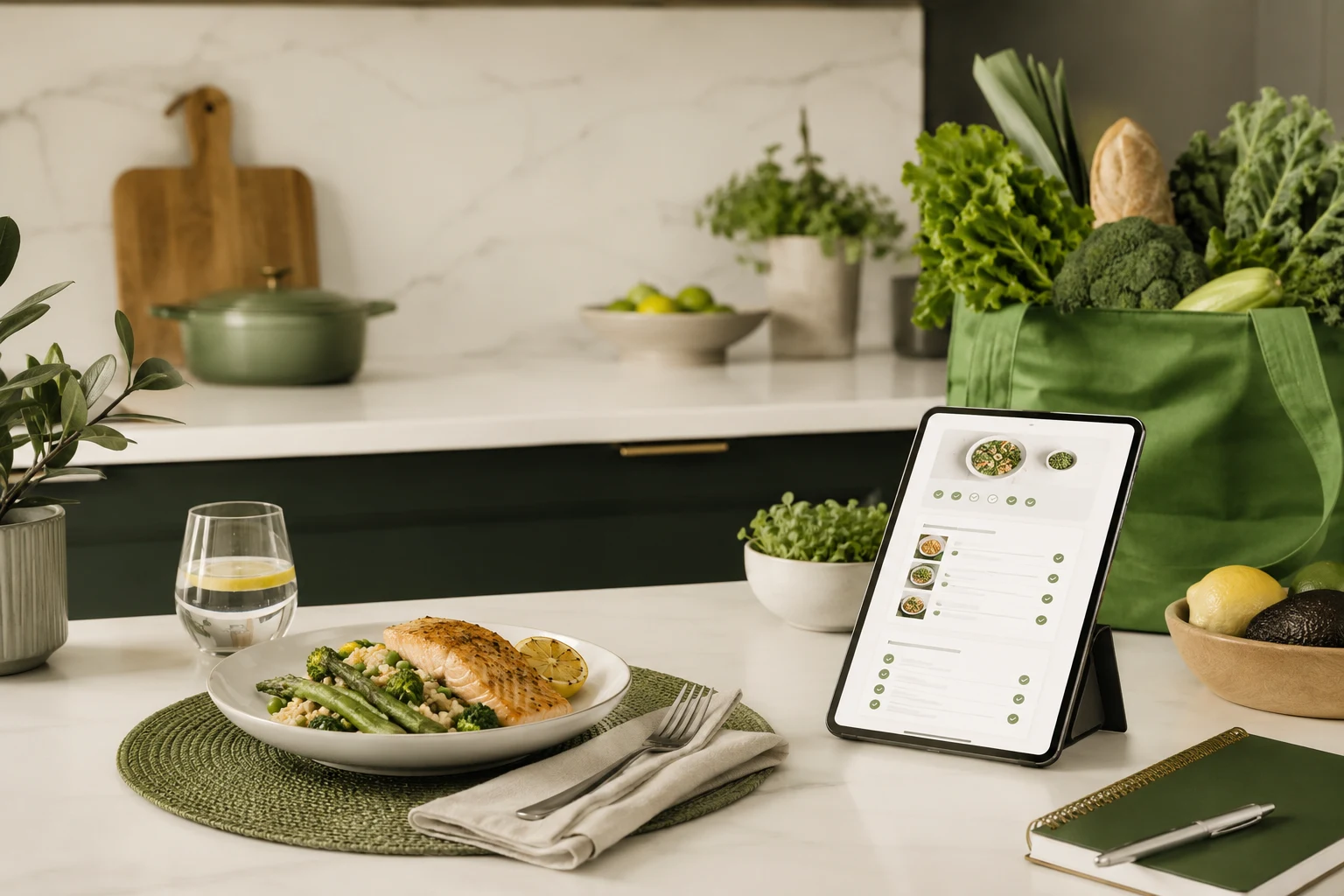
What is meal prep?
Meal prep means preparing meals or individual ingredients in advance. That can range from chopping vegetables and pre-cooking a sauce to fully portioned dishes for several days. The term comes from “meal preparation”. On the internet it is often tied to rows of identical boxes, but for many households it works better to prepare components instead of freezing the whole week.
Four forms of meal prep
- Complete meals – finished, portioned dishes for several days.
- Component prep – grains or potatoes cooked, vegetables cut, a sauce ready, combined later in different ways.
- Batch cooking – cooking a large quantity of one dish at once.
- Freezer prep – portions prepared for the freezer as a reserve.
Meal prep and meal planning belong together: preparation only helps when it fits a plan.
What meal prep really offers
Meal prep does not automatically save money and does not make a diet automatically healthy. The benefits appear only when preparation fits your habits. A box that is never eaten is simply a cost. Real benefits are fewer daily decisions, fewer spontaneous purchases, better use of supplies, predictable portion sizes, easier balanced meals and less kitchen chaos. The most important advantage is to secure the stressful moments of the week.
Meal prep in ten realistic steps
- Check the week.
- Check supplies.
- Limit the scope: do not prepare everything.
- Choose suitable dishes.
- Decide on portions and multiple uses.
- Derive the shopping list.
- Organise the cooking order: start long-cooking items and appliances first.
- Cool quickly.
- Pack and label.
- Plan the order of consumption. The plan must survive interruptions.
One base, several meals
Component prep is more practical for many households than complete dishes. A neutral base can be seasoned and combined in different ways. Example: one tray of roasted vegetables becomes a bowl with grains, a soup, a filling for wraps and a topping for a bake. Change the flavour with spices and sauces instead of adding more ingredients.
Safe storage
Cool cooked food quickly in shallow containers, keep it refrigerated, label the date and heat it through thoroughly before eating. Plan to eat the most perishable items first and freeze the rest early. When in doubt, do not eat it.
Meal prep as a tool to save on groceries
The financial benefit does not come from nice boxes but from fewer spontaneous purchases and better use of quantities. Meal prep can also get expensive if you buy many trend products or special ingredients. The strongest levers are: use supplies first, overlap ingredients between dishes, compare unit prices, keep a freezer reserve, learn your real portion sizes and plan one flexible dish.
Frequently asked questions
Do I need to cook for the whole week?
No. Many households start with two or three components and one or two prepared dishes and extend later.
How long does prepared food last?
That depends on the dish and storage. Chill quickly, label the date and follow official food-safety guidance. When in doubt, do not eat it.
Related: weekly plan, shopping list and use leftovers.