Cook on a budget
Use flexible staples, seasonal vegetables, pulses and smart ingredient overlap to build meals that fit a smaller grocery budget.
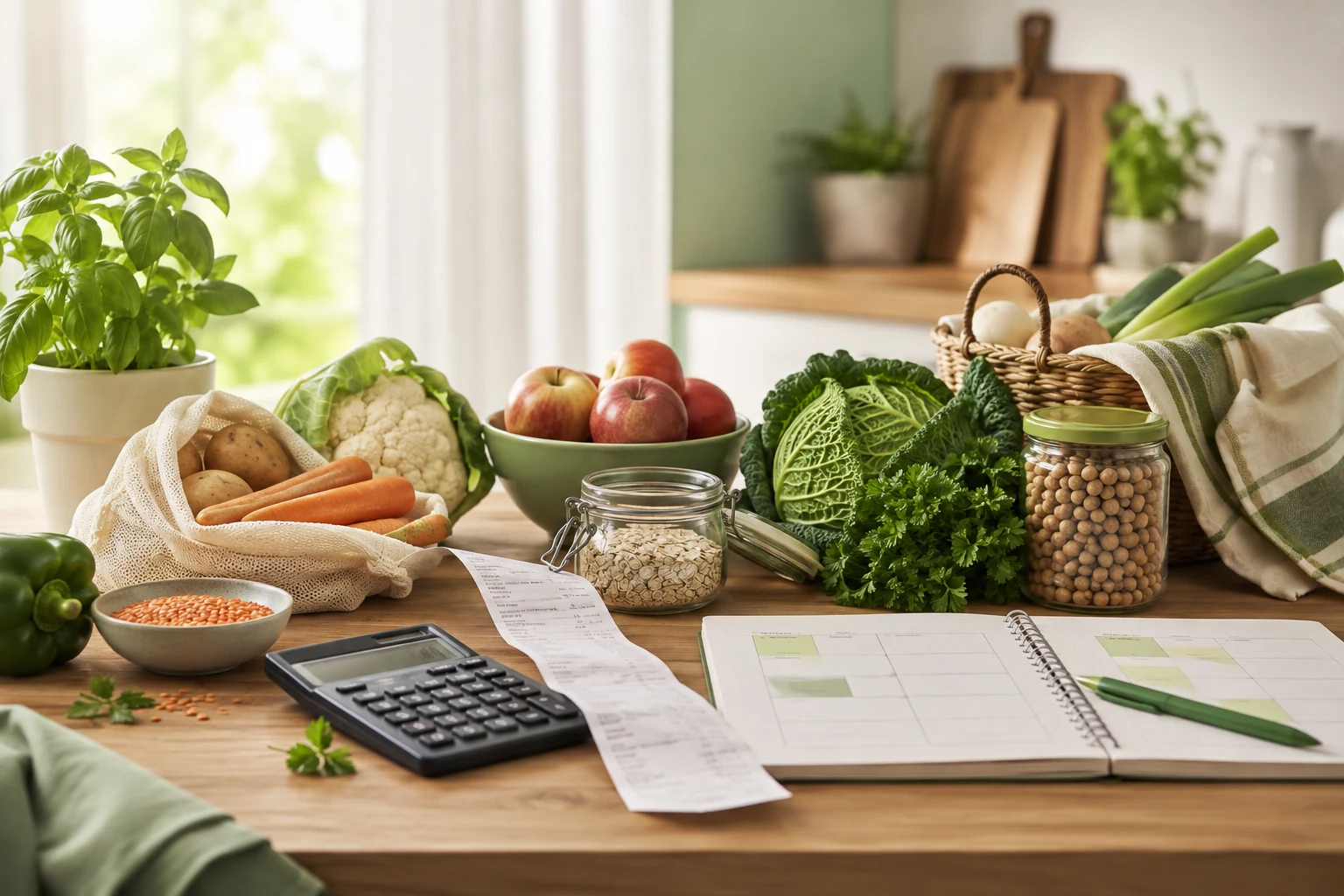
How can you cook cheaply without eating only pasta?
Plan meals first and products second. Use three to five versatile staples, add an inexpensive protein source, two kinds of vegetables and different flavour directions. Cheap cooking does not come from using as few ingredients as possible but from a good base: filling staples, seasonal vegetables, pulses and simple proteins can be combined in many dishes.
Cheap cooking is not the same as buying the cheapest
What counts is not the lowest price of a single product but the price of a complete meal that is actually eaten. Cooking cheaply does not mean doing without, eating monotonously or buying low quality.
Six cost levels of a cheap meal
- Purchase price – what you pay at the till.
- Unit price – the price per kilo or litre.
- Edible yield – how much is left after peeling and trimming.
- Usage rate – how much you actually use before it spoils.
- Follow-up costs – extra ingredients the dish needs.
- Everyday costs – energy and time.
Two examples: a seemingly cheap bulk pack is no bargain if half of it spoils, and dried pulses are often cheaper than canned ones if you have the time to cook them.
Calculating the price per portion correctly
Recipe prices often look lower than they are in everyday life. The most common reason: they are calculated with partial quantities although complete packs have to be bought for the first preparation. Calculate the full purchase first, then spread the cost over all meals that use it.
A small basic stock beats an overfilled pantry
A budget household does not need a huge collection. Too many supplies tie up money, take space and become confusing. A limited base that yields several dishes is more sensible: filling staples, protein building blocks, vegetables and fruit, flavour, a quick reserve and baking or binding ingredients. A “one in, one out” rule and a minimum stock instead of random supplies keep it manageable.
Flavour modules make the same ingredients new dishes
Variety is often confused with a long ingredient list. In fact it often comes from different flavour profiles. Rice, carrots, onions and lentils can become a mild stew, a curry or a Mediterranean pan. Typical modules are Mediterranean, curry, hearty German, Asian-inspired, fresh and smoky. Texture is a cheap source of variety, too: crunchy toppings, creamy purées, roasted instead of boiled.
The seven-step system for a cheap cooking week
- Set the budget and the number of meals.
- Check supplies.
- Choose a few staples.
- Build ingredient chains.
- Plan flavour modules.
- Derive the shopping list and sort it by route.
- Review the week and adjust.
Frequently asked questions
Which ingredients are good for cheap cooking?
The best cheap ingredient is not necessarily the one with the lowest kilo price. It should be filling, easy to combine, storable and liked in your household.
Are the examples price promises?
No. Real prices depend on region, retailer, time and product choice.
Related: save on groceries, budget planning and weekly plan.