Shopping list
Create a shopping list from planned meals, subtract pantry items and keep quantities visible before you enter the store.
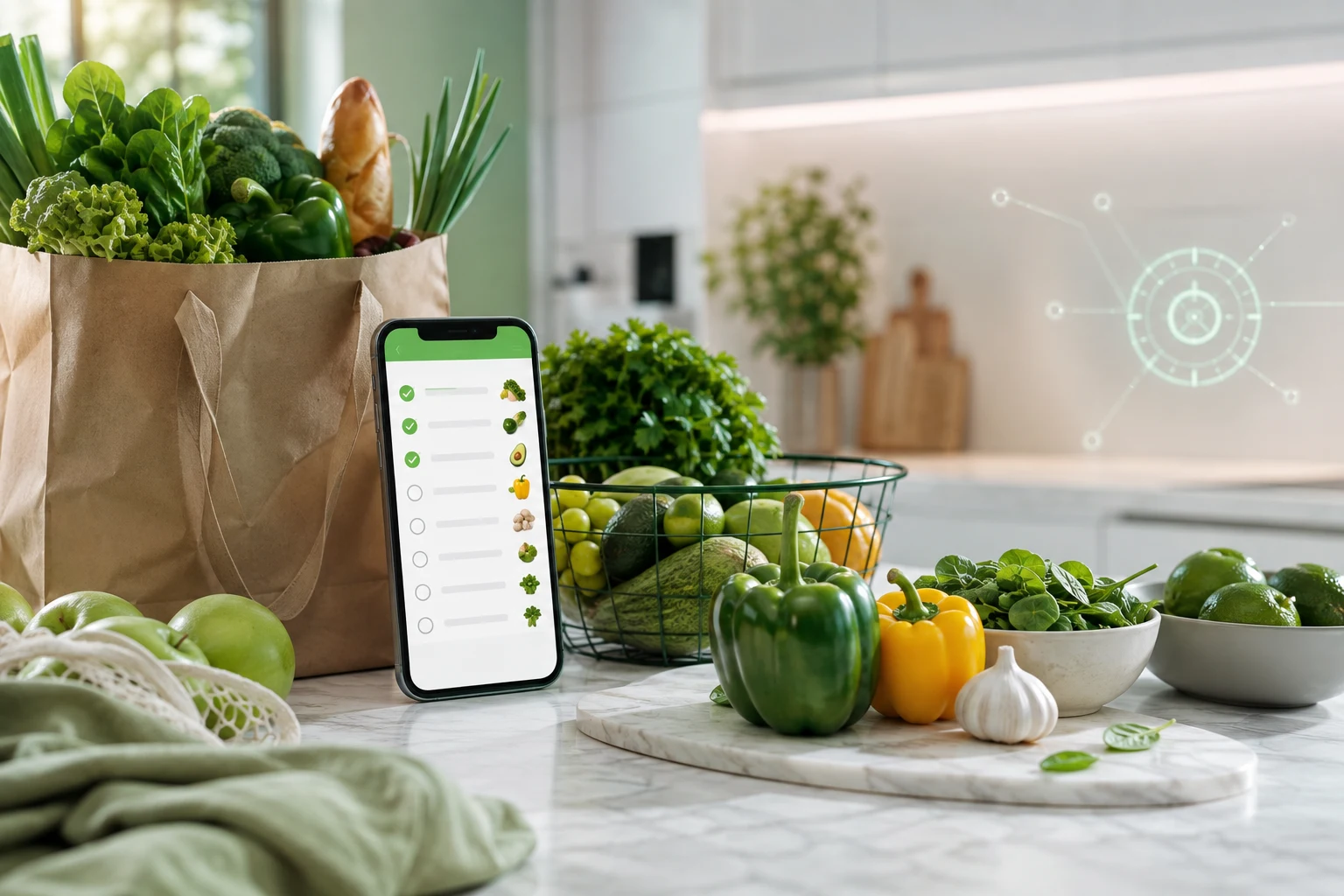
How do you make a really good shopping list?
First decide for which period and which people you are shopping. Check appointments, planned meals and what you already have. Calculate only the missing quantities, add pack size or a quality note for important items and then sort the list by your route through the shop. A good list does not come from memory; it comes from the weekly plan and the existing stock.
A shopping note versus shopping planning
A note stores reminders: milk, bread, apples. That is better than nothing, but it does not say whether one litre of milk is enough, whether bread is already in the freezer or what the apples are for. A reliable list has five functions: it reflects planned meals, subtracts stock, shows quantities, marks priorities and follows the way through the shop.
Nine steps to a complete list
- Set the shopping period. Three days, a week or a top-up shop.
- Check who is there and what is on. Guests, shifts, meals out.
- Collect the eating occasions. Breakfast, lunch boxes, snacks, dinner.
- Check supplies in four zones. Fridge, freezer, dry goods and spices/oils.
- Derive the need from the meals.
- Merge the need. Three recipes may each need onions; add the amounts first.
- Subtract stock and allow for losses.
- Mark priorities and alternatives. What is essential, what can be replaced?
- Sort by route and do the final check. A 60-second check before leaving catches most gaps.
Calculate quantities without drowning in tables
Standard portions give a rough orientation but cannot replace household experience. Children, adults, physical activity, side dishes and appetite change the need. The most reliable method is a learning household portion: note what was left over or missing and adjust next week. Also watch the pack-size dilemma: the larger pack is only cheaper if you will actually use it.
Sort the list by the real route
Many lists are ordered by recipe. That is logical when planning but forces loops in the shop: tomatoes for dish one, onions for dish two and vegetables again for dish three. A route sort bundles all products by area:
- Fruit and vegetables
- Bread and bakery
- Chilled products
- Dry goods
- Frozen food
- Drinks and heavy items
- Drugstore and household
- Optional items
You can draw your own shop plan in five minutes and reuse it. A master list of regular items saves starting from zero every week.
Templates for different situations
- Classic weekly shop – planned meals minus stock.
- Small top-up – only fresh items and gaps.
- Several shops – a different list per store.
- Very tight shop – essentials first, optional items last.
How a list protects the budget
A list does not automatically save money, but it creates the frame in which budget decisions are made before you enter the shop. In the shop, time pressure, advertising, hunger and product placement all have an effect. Set priorities in advance, and decide how you handle offers: they should fit the plan, not change the whole plan.
Typical mistakes and quick repairs
- The list starts only just before the shop – start earlier, from the meal plan.
- Products are planned instead of meals – write the meal first.
- Quantities are missing – add amount and pack size.
- Supplies are only checked superficially – check the four zones.
- Everything counts as equally important – mark priorities.
- Substitutes are not prepared – note one alternative for key items.
A sample shopping list by section
For a week of soup, pasta, roast chicken, wraps with salad and a potato bake, a route-sorted list could look like this (quantities are illustrative and depend on your household and supplies):
- Fruit and vegetables: onions, carrots, potatoes, herbs, cucumber or salad, tomatoes.
- Bread and bakery: bread, wraps or tortillas.
- Chilled: chicken, quark, cheese, milk.
- Dry goods: pasta, tinned tomatoes, beans.
- Frozen: spare vegetables (if there are none at home).
- Optional: things that are nice but that the plan can do without.
Notice that nothing already at home is on the list — it was subtracted when you checked supplies.
Shopping in Germany: what to keep in mind
- Weekly offers. Browse store leaflets and apps after writing the list rather than before, so an offer helps you buy what you need more cheaply instead of what you do not need because it is reduced.
- Store brands and name brands. For simple staples such as flour, pasta and tins, store brands are often better value; for the rest compare ingredients and price per kilogram or litre, not per pack.
- Bottle deposits (Pfand). Mark deposit drinks separately so the till total holds no surprises and you remember to return the empties.
- Household goods. Keep cleaning and hygiene products in their own section — they are easy to forget because they are not part of the menu.
Prices and ranges change, so Smartteller does not promise specific amounts: the list helps you decide what to buy, and you see the final cost at the checkout.
Frequently asked questions
Paper, note app or automatic list?
All work if they are used. An automatic list that is derived from the meal plan and subtracts stock removes the most repetitive step.
How do I share a list in a household?
Agree who adds items, mark what has been bought and avoid duplicates by checking the list before buying.
Related: features, Smartteller app and the budget planning guide.